Pregnancy is one of the most exciting and life-changing journeys in a woman’s life. The first trimester, which covers the first 12 weeks of pregnancy, is a period of rapid development for your baby and significant physical and emotional changes for you. While many women experience a healthy pregnancy without complications, the first trimester can also bring uncertainty, questions, and concerns.
Today, online healthcare has made it easier than ever for expecting mothers to receive professional medical advice from the comfort of their homes. An online gynecologist consultation can help you understand your symptoms, monitor your health, and receive expert guidance during the early stages of pregnancy.
In this article, we will discuss essential first-trimester care at home, common symptoms to expect, warning signs you should never ignore, and when it is the right time to book an online gynecologist consultation.
Understanding the First Trimester
The first trimester begins from the first day of your last menstrual period and continues until the end of the 12th week of pregnancy. During this time, your baby’s major organs, brain, spinal cord, and heart begin to develop.
Many women discover they are pregnant during this stage and may experience a wide range of symptoms due to hormonal changes.
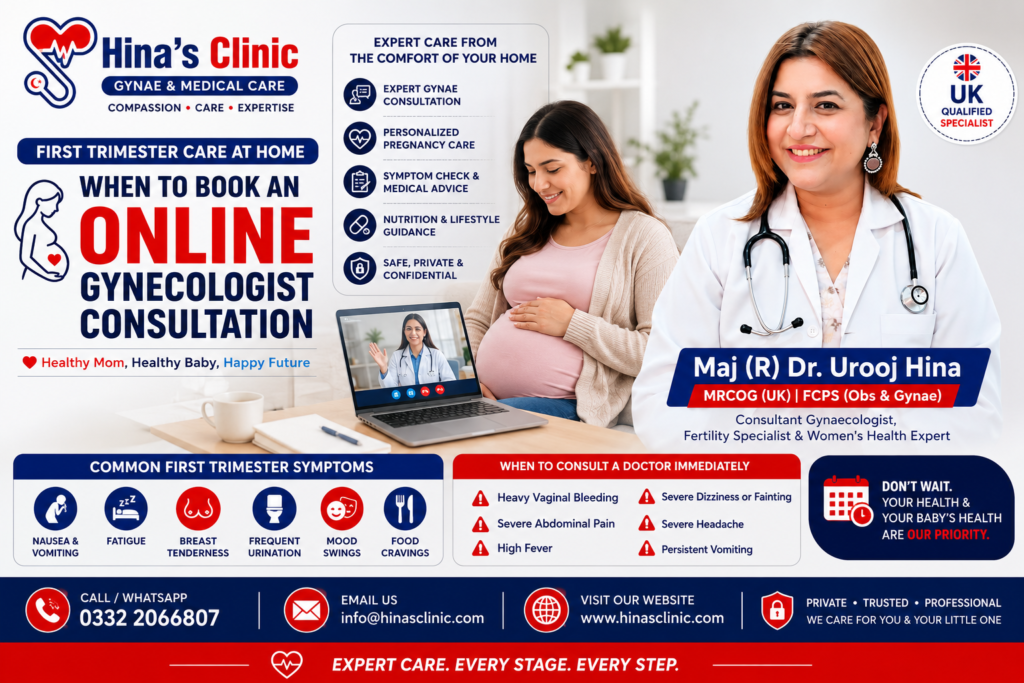
Common first-trimester symptoms include:
- Missed periods
- Morning sickness
- Nausea and vomiting
- Breast tenderness
- Fatigue
- Frequent urination
- Mood swings
- Mild bloating
- Food cravings or aversions
While these symptoms are usually normal, every pregnancy is unique. Consulting a qualified gynecologist can help ensure both mother and baby remain healthy.
Why First Trimester Care Matters
The first trimester lays the foundation for a healthy pregnancy. Proper care during these early weeks can significantly influence maternal health and fetal development.
Good prenatal care helps:
- Monitor pregnancy progress
- Detect potential complications early
- Ensure proper nutrition
- Reduce pregnancy-related risks
- Provide emotional support
- Guide lifestyle modifications
Many pregnancy complications can be identified early through regular medical consultations and appropriate screening.
Essential First Trimester Care at Home
1. Start Prenatal Vitamins Early
One of the most important steps after confirming pregnancy is beginning prenatal vitamins.
Folic acid is particularly important because it helps prevent neural tube defects that affect the baby’s brain and spinal cord.
Your doctor may also recommend:
- Iron supplements
- Calcium
- Vitamin D
- Other nutritional support based on your health needs
Never start supplements without medical advice.
2. Maintain a Healthy Diet
A balanced diet supports your baby’s development and helps manage pregnancy symptoms.
Focus on:
- Fresh fruits and vegetables
- Whole grains
- Lean proteins
- Dairy products
- Healthy fats
- Adequate hydration
Avoid:
- Raw or undercooked meat
- Unpasteurized dairy products
- Excess caffeine
- Alcohol
- Smoking
Healthy eating can reduce fatigue and support healthy fetal growth.
3. Get Enough Rest
Many women feel unusually tired during early pregnancy.
Your body is working hard to support the developing baby, making rest essential.
Try to:
- Sleep 7–9 hours daily
- Take short breaks during the day
- Avoid excessive physical strain
- Maintain a regular sleep schedule
4. Stay Physically Active
Light exercise can improve circulation, reduce stress, and support overall health.
Safe activities often include:
- Walking
- Prenatal stretching
- Gentle yoga
- Low-impact exercises
Always consult your healthcare provider before starting any exercise routine during pregnancy.
5. Monitor Your Symptoms
Keeping track of your symptoms helps identify changes that may require medical attention.
Consider noting:
- Nausea severity
- Weight changes
- Bleeding episodes
- Pain levels
- Blood pressure (if advised)
A symptom diary can be helpful during online consultations.
Benefits of an Online Gynecologist Consultation During Pregnancy
Modern telemedicine has transformed access to women’s healthcare.
An online consultation allows pregnant women to:
Get Professional Guidance Quickly
Instead of waiting days or weeks for appointments, you can speak with a qualified gynecologist promptly.
Receive Care from Home
This is especially helpful for women experiencing fatigue, nausea, transportation difficulties, or busy schedules.
Discuss Sensitive Concerns Privately
Many women feel more comfortable discussing personal pregnancy concerns in a private setting.
Save Time and Travel Costs
Online consultations eliminate unnecessary travel while providing access to expert advice.
Obtain Follow-Up Care Easily
Routine follow-ups can often be managed effectively through virtual appointments.
When Should You Book an Online Gynecologist Consultation?
Many women wait until problems arise before seeking medical advice. However, early consultation is strongly recommended.
Book an Appointment If:
You Have a Positive Pregnancy Test
The ideal time to consult a gynecologist is immediately after confirming pregnancy.
Your doctor can:
- Estimate gestational age
- Recommend necessary tests
- Prescribe prenatal vitamins
- Discuss lifestyle modifications
You Have Severe Morning Sickness
Persistent vomiting can lead to dehydration and nutritional deficiencies.
Medical guidance is important if you:
- Cannot keep food down
- Lose weight
- Feel dizzy
- Experience severe weakness
You Have a History of Pregnancy Complications
Women with previous:
- Miscarriages
- High blood pressure
- Diabetes
- Fertility treatments
- High-risk pregnancies
should seek early prenatal care.
You Have Chronic Medical Conditions
Conditions such as thyroid disorders, hypertension, diabetes, or autoimmune diseases require careful monitoring during pregnancy.
You Need Nutritional Guidance
Every pregnancy is different.
A gynecologist can provide personalized recommendations regarding:
- Weight gain
- Dietary needs
- Supplements
- Physical activity
Warning Signs That Need Immediate Medical Attention
While many symptoms are normal, certain warning signs should never be ignored.
Seek urgent medical care if you experience:
Heavy Vaginal Bleeding
Light spotting may occur in early pregnancy, but heavy bleeding requires prompt evaluation.
Severe Abdominal Pain
Persistent or severe pain may indicate a serious underlying condition.
High Fever
A significant fever during pregnancy should always be assessed by a healthcare professional.
Severe Dizziness or Fainting
These symptoms may indicate dehydration, anemia, or other medical concerns.
Sudden Swelling or Severe Headaches
Although more common later in pregnancy, these symptoms should always be discussed with a doctor.
Emotional Well-Being During the First Trimester
Pregnancy affects emotional health as much as physical health.
Many women experience:
- Anxiety
- Mood changes
- Stress
- Fear of miscarriage
- Concerns about childbirth
Talking openly with your healthcare provider can help reduce anxiety and improve confidence throughout pregnancy.
Remember that seeking support is a sign of responsible prenatal care.
Building a Healthy Pregnancy Journey
The first trimester is an important time to establish healthy habits and maintain regular communication with your healthcare provider.
Simple steps such as:
- Eating nutritious foods
- Taking prenatal vitamins
- Staying hydrated
- Getting adequate rest
- Attending regular consultations
can make a significant difference for both mother and baby.
Final Thoughts
The first trimester is a crucial stage of pregnancy that deserves proper care, attention, and professional guidance. While many aspects of pregnancy can be managed safely at home, regular communication with a qualified gynecologist ensures that potential concerns are addressed early.
If you have recently discovered you are pregnant, are experiencing concerning symptoms, or simply need expert advice, an online gynecologist consultation can provide reassurance and personalized care from the comfort of your home.
At Hina’s Clinic, we are committed to supporting women through every stage of pregnancy with compassionate, evidence-based care.
Book Your Online Pregnancy Consultation
Major (R) Dr. Urooj Hina
MRCOG (UK) • FCPS (Obs & Gynae)
Trusted Gynecologist & Women’s Health Specialist
📞 Call / WhatsApp: 0332 2066807
🌐 Website: www.hinasclinic.com
📧 Email: [email protected]
Frequently Asked Questions (FAQs)
1. What is the first trimester of pregnancy?
The first trimester is the first 12 weeks of pregnancy, starting from the first day of your last menstrual period. During this stage, your baby’s major organs, brain, heart, and nervous system begin to develop.
2. When should I book my first online gynecologist consultation after a positive pregnancy test?
It is recommended to book an online gynecologist consultation as soon as you confirm your pregnancy. Early medical guidance helps ensure a healthy start for both mother and baby.
3. Is online gynecologist consultation safe during pregnancy?
Yes. Online consultations are a safe and convenient way to discuss symptoms, receive pregnancy advice, review test results, and get professional guidance from a qualified gynecologist.
4. What are the common symptoms during the first trimester?
Common first-trimester symptoms include:
- Missed periods
- Morning sickness
- Nausea and vomiting
- Fatigue
- Breast tenderness
- Frequent urination
- Mood swings
- Food cravings or aversions
5. Which symptoms during early pregnancy should never be ignored?
Seek immediate medical advice if you experience:
- Heavy vaginal bleeding
- Severe abdominal pain
- High fever
- Severe dizziness or fainting
- Persistent vomiting
- Severe headaches or sudden swelling
6. Can I manage my pregnancy at home during the first trimester?
Many aspects of pregnancy can be managed at home through proper nutrition, hydration, rest, prenatal vitamins, and regular medical consultations. However, professional prenatal care remains essential.
7. What vitamins should I take during the first trimester?
Most pregnant women are advised to take:
- Folic Acid
- Iron
- Calcium
- Vitamin D
Always consult your gynecologist before starting any supplements.
8. How much rest is recommended during the first trimester?
Most pregnant women should aim for 7–9 hours of sleep each night and take additional rest when needed, especially if experiencing fatigue or morning sickness.
9. Can I exercise during the first trimester?
Yes, light physical activities such as walking, prenatal yoga, and gentle stretching are generally considered safe. Always consult your doctor before starting any exercise routine during pregnancy.
10. What foods should I avoid during early pregnancy?
Pregnant women should avoid:
- Raw or undercooked meat
- Unpasteurized dairy products
- Alcohol
- Smoking
- Excess caffeine
- Certain high-mercury fish
11. How often should I consult a gynecologist during pregnancy?
The frequency of consultations depends on your pregnancy and medical history. Most women benefit from regular prenatal checkups throughout pregnancy to monitor maternal and fetal health.
12. Can an online doctor prescribe pregnancy supplements and tests?
Yes. A qualified gynecologist can recommend prenatal vitamins, advise necessary investigations, and guide you regarding pregnancy-related healthcare needs during an online consultation.
13. Is morning sickness a sign of a healthy pregnancy?
Morning sickness is a common symptom caused by pregnancy hormones and is often considered a normal part of early pregnancy. However, severe vomiting should be discussed with a healthcare professional.
14. What should I discuss during my first online pregnancy consultation?
You should discuss:
- Pregnancy confirmation
- Medical history
- Previous pregnancies
- Current symptoms
- Medications
- Diet and lifestyle
- Recommended prenatal tests
15. How can Hina’s Clinic help during the first trimester?
At Hina’s Clinic, Major (R) Dr. Urooj Hina (MRCOG UK, FCPS Obs & Gynae) provides expert online pregnancy consultations, prenatal guidance, symptom assessment, nutritional advice, and personalized care to support women throughout their pregnancy journey.
Medical Disclaimer
This article is intended for educational purposes only and should not replace professional medical advice, diagnosis, or treatment. Always consult a qualified healthcare provider regarding any pregnancy-related concerns.
Reviewed by: Major (R) Dr. Urooj Hina, MRCOG (UK), FCPS (Obs & Gynae)
Website: www.hinasclinic.com
Email: [email protected]